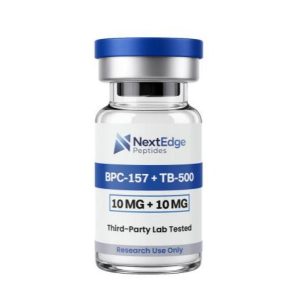
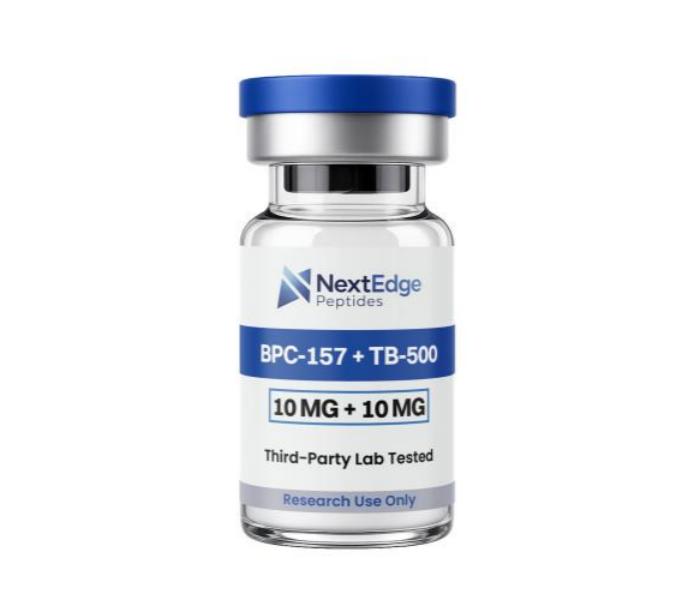
BPC-157 + TB-500 (commonly referred to as the “Wolverine Blend”) is a peptide combination composed of two peptides studied for their roles in cellular repair signaling and tissue response pathways. BPC-157 is derived from a partial sequence of a naturally occurring gastric peptide, while TB-500 is a synthetic form of Thymosin Beta-4, a peptide involved in cellular migration and structural regulation.
In experimental research models, this peptide combination has been observed to interact with pathways associated with:
• Cellular signaling related to tissue repair and regeneration models
• Angiogenesis and microvascular development pathways
• Cell migration, differentiation, and structural protein regulation
• Inflammatory signaling and cellular response modulation
Scientific literature has explored the individual and combined roles of these peptides in cellular and molecular processes:
👉 https://globalrph.com/2025/11/bpc-157-and-tb-500-background-indications-efficacy-and-safety/
👉 https://pmc.ncbi.nlm.nih.gov/articles/PMC12313605/
Due to their complementary signaling profiles and stability in research environments, BPC-157 and TB-500 are frequently studied together in peptide-based research focused on repair mechanisms and cellular adaptation.
Their structural characteristics and pathway interactions continue to make this combination of interest in:
• Peptide pharmacology and regenerative pathway research
• Cellular repair and response modeling
• Angiogenesis and structural protein interaction studies
• Regulatory pathway and signaling investigations