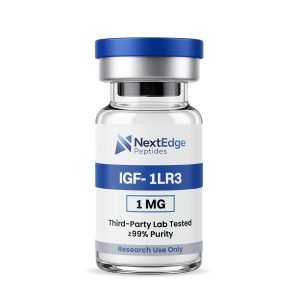
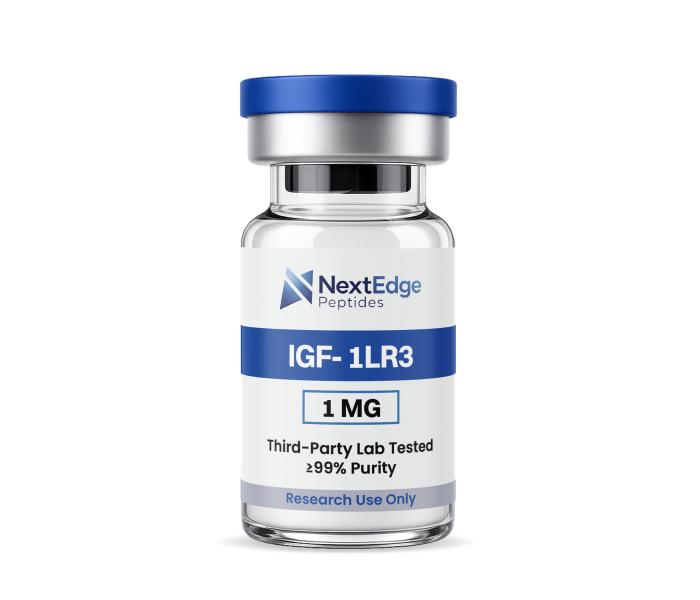
IGF-1 LR3 (Insulin-like Growth Factor-1 Long Arg3) is a synthetic analog of insulin-like growth factor-1 (IGF-1), engineered with an extended amino acid sequence to enhance stability and receptor interaction. It is widely studied in controlled laboratory settings for its role in cellular growth signaling, proliferation, and metabolic regulation processes.
In experimental research models, IGF-1 LR3 has demonstrated interactions with pathways associated with:
• Cellular signaling mechanisms involved in growth and proliferation models
• Activation of IGF-1 receptor (IGF-1R)–mediated signaling cascades
• Regulation of protein synthesis and cellular differentiation processes
• Metabolic signaling and nutrient utilization pathways
Scientific literature has further examined its involvement in key cellular regulatory and signaling pathways:
👉 https://pmc.ncbi.nlm.nih.gov/articles/PMC7913862/
👉 https://pmc.ncbi.nlm.nih.gov/articles/PMC4665094/
Due to its enhanced stability and reduced binding affinity to IGF-binding proteins, IGF-1 LR3 is commonly utilized in peptide-based research focused on sustained signaling activity and pathway modulation.
Its structural characteristics and signaling profile continue to make IGF-1 LR3 a subject of interest in:
• Peptide pharmacology and molecular research
• Cellular growth and proliferation modeling
• Metabolic and protein synthesis pathway studies
• Regulatory and signaling pathway investigations