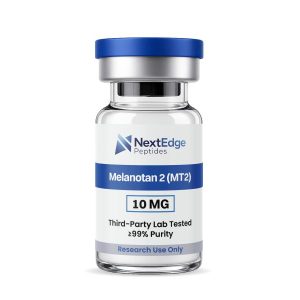
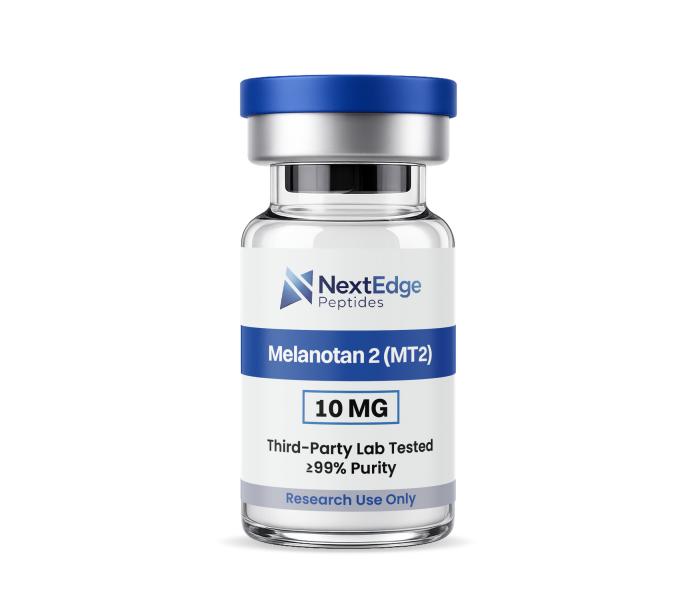
Melanotan II is a melanocortin receptor agonist that interacts with multiple receptor subtypes, including MC1R, MC3R, and MC4R, which are involved in pigmentation, energy regulation, and neuroendocrine signaling. It is developed for research applications focused on receptor-mediated signaling and systemic pathway interactions.
This peptide has been widely studied for its role in activating melanocortin pathways through receptor-specific mechanisms. In controlled laboratory environments, Melanotan II is frequently explored in models examining pigmentation signaling, central nervous system activity, and neuroendocrine response processes.
In experimental research models, Melanotan II has demonstrated relevance in pathways associated with:
• Activation of melanocortin receptor (MC1R/MC3R/MC4R)–mediated signaling cascades
• Modulation of pigmentation-related and melanogenesis pathways
• Interaction with central nervous system and neuroendocrine signaling processes
• Peptide–receptor dynamics within melanocortin signaling systems
Emerging scientific literature has further examined the role of Melanotan II in coordinated cellular and systemic signaling activity:
👉 https://pubmed.ncbi.nlm.nih.gov/8637402/
👉 https://pubmed.ncbi.nlm.nih.gov/34464955/
Studies have demonstrated that Melanotan II activates melanocortin receptors involved in pigmentation and central signaling pathways through receptor-mediated mechanisms. These findings highlight its relevance in research focused on melanocortin system regulation and peptide-driven signaling responses.
Through its receptor-specific activity, Melanotan II provides a targeted framework for studying melanocortin-mediated signaling and neuroendocrine interactions. Its ability to engage multiple receptor subtypes makes it particularly relevant in research exploring both peripheral and central regulatory processes.
Due to its structural properties and signaling profile, Melanotan II remains a focus in advanced peptide research exploring:
• Melanocortin receptor signaling networks
• Pigmentation and melanogenesis pathway studies
• Central nervous system and neuroendocrine regulation
• Peptide pharmacology and molecular pathway investigations